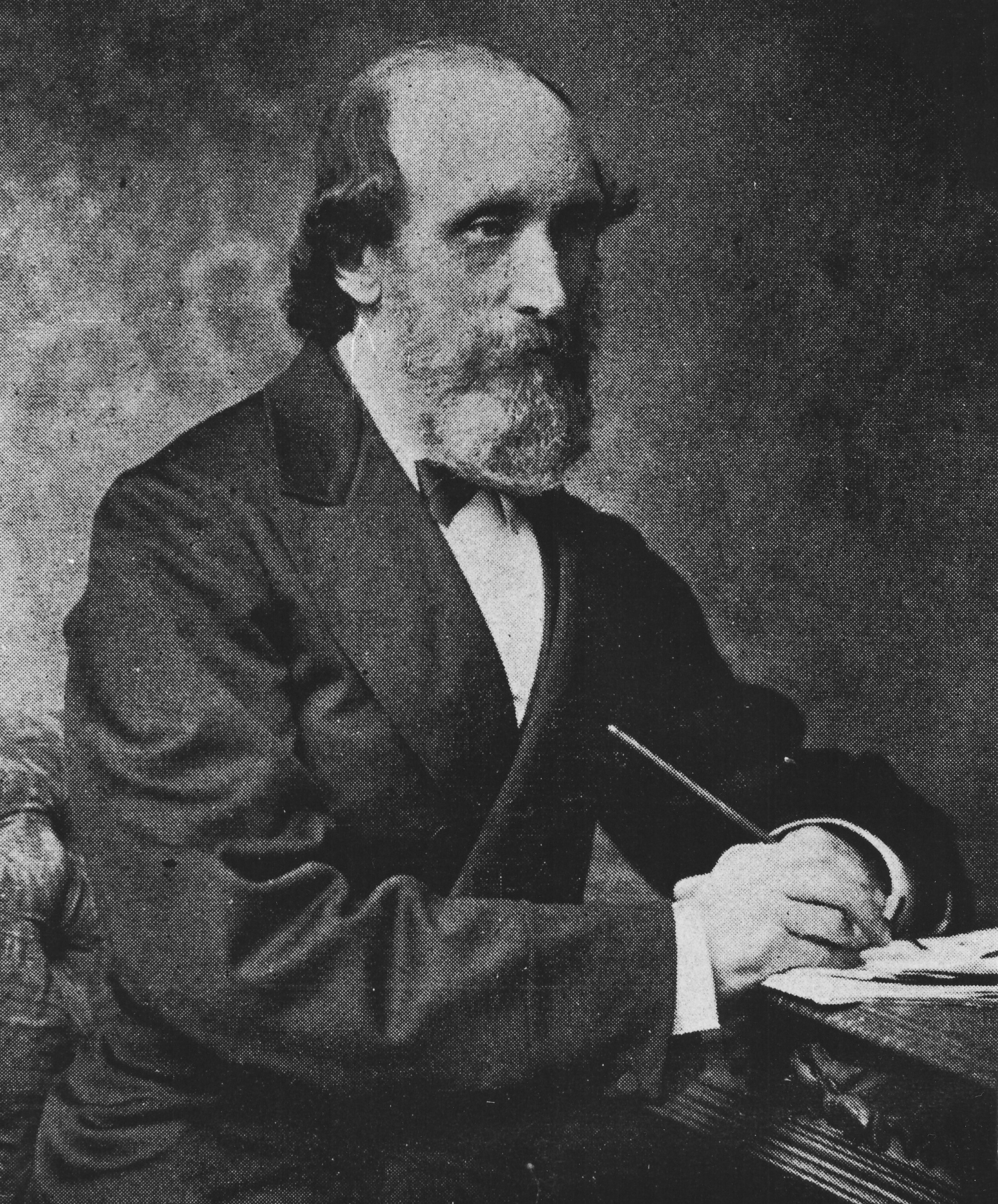
Ever wondered who was R.T. Hall, the namesake of the Lecture that launches every CSANZ Annual Scientific Meeting?

R.T. Hall came to Sydney from England in 1853 on the vessel “Waterloo”.

He was consumptive but managed to survive the long voyage and made a complete recovery.  His affairs flourished and after he died in 1894, a trust was established initially for: “An invalid home for the reception, cure and treatment of culture for respectable, moral persons, residing in Sydney or its suburbs, and suffering from consumption of the lungs”.

A sanitarium was established in the Blue Mountains in 1909 and was active till the early 1950s when the treatment of tuberculosis radically changed. The trust then looked for an alternative field to support and became involved in The National Heart Foundation. In 1959 and for a number of years, the bequest supported the RT Hall Lecturer.  However, in more recent times, the bequest has supported the RT Hall Prize and the lectureship has been funded by a donation from The National Heart Foundation, for which we are very grateful.

Register for the next CSANZ ASM here
Warfarin shortage in Australia – Update 2 March 2023

We are currently in consultation with TGA, and understand that there are a number of shortages including:

  • Coumadin 5 mg tablets until end of July
  • Coumadin 2 mg tablets until end of April
  • Marevan 3 mg tablets until 10 March 2023

TGA are actively working with suppliers and chemists to ensure that appropriate stocks remain. We are aware that some patients are attending multiple pharmacies and that some patients may have to undertake a temporary substitution in either formulation or individual tablet dosage.  This may require more frequent monitoring and we have communicated to the media that patients should consult with their prescribing doctor.

We have strongly advocated to TGA the importance of warfarin to many patients, and have requested that they investigate approaches which permit them to communicate to patients where warfarin is accessible.

We’ll keep you posted with any more developments.

Cardiology Research Review: Issue 151, with commentary by A/Prof John Amerena.

In this edition:

–  Smartwatch-enabled detection of LV dysfunction
–  Dapagliflozin in patients with HF with improved ejection fraction
–  Empagliflozin in HF patients with preserved vs mid-range ejection fraction
–  Trends and real-world safety of PCI for stable ischaemic heart disease
–  Low-dose rosuvastatin vs dietary supplements
–  Reanalysis of mortality data from the FOURIER trial
–  Effects of olpasiran on lipoprotein(a) levels in patients with ASCVD
–  Screening for risk of sudden cardiac death in young competitive athletes
–  Baxdrostat for treatment-resistant hypertension
–  Major cardiovascular events and subsequent risk of kidney failure requiring replacement therapy

Download Cardiology_Research_Review_Issue_151 (pdf), with commentary by A/Prof John Amerena.

Australian Cardiology Practice Review: Issue 26, with commentary by A/Prof John Amerena

In this issue:

–  ACC consensus on multidisciplinary care for cardiac amyloidosis
–  AHA: Complementary and alternative medicines for HF
–  Infective endocarditis after TAVR
–  Methamphetamine-associated HF
–  Early rhythm control for improving outcomes in AF
–  AHA: Heart disease and stroke statistics
–  A new era in cardiac rehabilitation delivery
–  PBS listings
–  USPSTF: Screening for lipid disorders in children
–  Management of HF with arrhythmia in congenital heart disease
–  Effect of sodium restriction in patients with HF
–  Cannabis use and heart transplantation
–  Albuminuria and HF
–  COVID-19 resources
–  Conferences, workshops and CPD

Download Cardiology_Practice_Review_Issue_26 (pdf)

Cardiology Practice Review: Issue 25, with commentary by Dr Janette Tenne

In this issue:

–  Aortic stenosis: ESC/EACTS vs ACC/AHA guidelines
–  Atherosclerosis burden/progression to personalise therapy
–  Ventricular arrhythmias and mortality in heart failure
–  Assessing gaps in pulmonary hypertension care
–  Between-country differences in implantable device therapy
–  Risk stratification of older patients in the emergency department
–  Australian trial to evaluate calcium scoring in women
–  HDL-C and risk of bone fracture
–  Extension of COVID-19 MBS services
–  Clinical outcomes of telehealth during COVID-19
–  Management of significant tricuspid regurgitation
–  Geriatric conditions associated with cardiovascular disease
–  COVID-19 resources
–  Conferences, workshops, and CPD

Download the Cardiology_Practice_Review_Issue_25 here (pdf)

ECG of the Month Feb 2023

ECG of the Month
presented by A/Prof Alex Voskoboinik

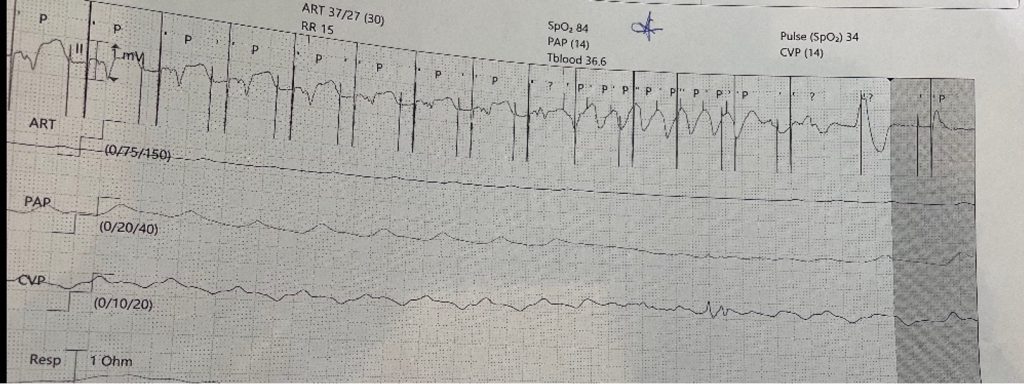
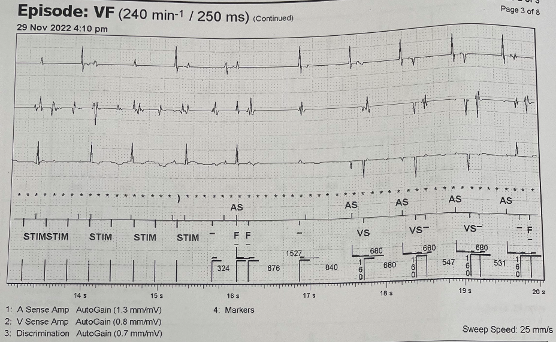
A 68 year old male with a long standing non-ischaemic cardiomyopathy is admitted with a NSTEMI and found to have triple vessel disease. On Day 1 post-CABGs, he complains of dizzy spells and the following is seen on telemetry:

The most likely explanation is:

  1. Artefact
  2. Ventricular tachycardia
  3. SVT with aberrancy
  4. Oversensing
  5. Undersensing

The most likely explanation is:

  1. Artefact
  2. Ventricular tachycardia
  3. SVT with aberrancy
  4. Oversensing
  5. Undersensing
Explanation

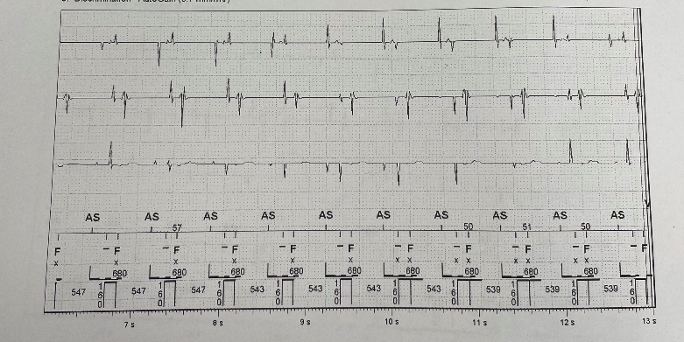
This patient has a pre-existing ICD (which remains active) and epicardial pacing wires. The beginning of the telemetry strip starts with A-V pacing from the epicardial pacing leads with a large pacing stimulus visible from stimulation of both chambers. The ICD then proceeds to deliver anti-tachycardia pacing (which appears as the wide complex ‘tachycardia’ with pacing spikes prior to each QRS complex). The haemodynamic effects of this ATP can be seen on the PAP (Pulmonary Artery Pressure) invasive waveform with flattening of the trace seen. The ICD interrogation is shown, and demonstrates oversensing of the epicardial pacing stimulus on the ICD’s ventricular channel – hence the ICD double counts both the stimulus and the ventricular paced beat and hence concludes that the patient is in VT/VF, and delivers anti-tachycardia pacing.

Discuss or post a question on the CSANZ Forum 

2022 CSANZ ASM Prize winners

Congratulations to all the 2022 ASM Prize Winners

Allied Health, Science and Technology Prize
Winner:  Adam Livori, Ballarat Health Services

Assessment of Telehealth Cardiology Pharmacist Clinic in Improving Therapy Adherence following Acute Coronary Syndrome and PCI.
 
Read abstract in full as published in Heart Lung and Circulation Journal.

Judges: Judith Katzenellenbogen, Andrew Maiorana, Katrina Poppe

Cardiac Imaging Prize
Winner:  Aaisha Ferkh, Westmead Hospital

Echocardiographic deep phenotyping of hypertrophic cardiomyopathies: amyloid, Anderson-Fabry and hypertensive heart disease.
Read abstract in full as published in Heart Lung and Circulation Journal.

Judges: Selwyn Wong, Raj Puranik, Rebecca Kozor

Cardiovascular Nursing Prize
Winner:  Kristel Janssens, Baker Heart and Diabetes Institute

Modest association between peak exercise blood pressure and ambulatory hypertension in endurance athletes.
Read abstract in full as published in Heart Lung and Circulation Journal.

Judges: Patricia Davidson, Kimberley Bardsley, Christopher Lee

Heart Failure Prize
Winner:  David Chieng, Baker Heart and Diabetes Institute

Catheter ablation in atrial fibrillation and heart failure with preserved ejection fraction improves peak pulmonary capillary wedge pressure, exercise capacity and quality of life. A Prospective Randomised Controlled Trial (RCT-STALL HFpEF).
Read abstract in full as published in Heart Lung and Circulation Journal.

Judges: Andrew Sindone, Rob Doughty, Theresa McDonagh

Heart Rhythm Prize
Winner:  Ahmed Al-Kaisey, Royal Melbourne Hospital

Polygenic risk scores identify atrial electrophysiological substrate abnormalities and predict atrial fibrillation recurrence following catheter ablation.
Read abstract in full as published in Heart Lung and Circulation Journal.

Judges: Andrew Martin, Livia Hool, Karen Phillips

Indigenous Health Prize
Winner:  Keriana Kingi-Nepe, Gisborne Hospital NZ

The impact of Sacubitril-Valsartan on Te Tairāwhiti (Gisborne and East Coast) region.
Read abstract in full as published in Heart Lung and Circulation Journal.

Judges: Alex Brown, Karen Brewer

Paediatric and Congenital Cardiology Prize
Winner:  Elizabeth Paratz, Baker Heart and Diabetes Institute

Prevalence of coronary artery anomalies in young sudden cardiac death: insights from a prospective state-wide registry.
Read abstract in full as published in Heart Lung and Circulation Journal.

Judges: Clare O’Donnell, Mugur Nicolae

Prevention Prize
Winner:  Louise Segan, Baker Heart and Diabetes Institute

Development and validation of the HARMS2-AF lifestyle risk score to predict incident AF.
Read abstract in full as published in Heart Lung and Circulation Journal.

Judges: David Colquhoun, Julie Redfern, Robyn Gallagher

2022 CSANZ ASM New Investigator Poster Prizes

Medical Student Poster Prize
Winner:  Angus Fung, UNSW

Title: Prognostic association supports indexing size measures in echocardiography by body surface area.

Judges: Peter Psaltis and Dominica Zentner

Basic Physician Trainee or Advanced Trainee Poster Prize 
Winner:  Gavin Huangfu, Fiona Stanley Hospital

Title:  CT evaluation of hepatic fat: A novel marker for high-risk coronary atherosclerosis in Familial Hypercholesterolaemia.

Judges: Matthew Worthley, Liza Thomas

PhD Candidate Poster Prize 
Winner: Himawan Fernando, Alfred Health

Title: LidocAine Versus Opioids In MyocarDial infarction: The AVOID-2 randomised controlled trial.

Judges: Clara Chow, Will Parsonage

Cardiovascular Nursing Poster Prize 
Winner:  Nathan Herbert, Barwon Health

Title: Impact of COVID-19 pandemic lockdown on a Victorian regional ST-elevation myocardial infarction service.

Judges: Caleb Ferguson, Rochelle Wynne 

Allied Health, Science and Technology Poster Prize
Winner:  Clara Zwack, University of Sydney

Stress and its relationship to cardiovascular risk in young adults with intellectual disability

Judges: Lee Nedkoff, Stacey Nielson

Congratulations to all finalists in the prize sessions and thank you to all the judges.

Posts navigation