Dr Adeel Khoja – AHA 2022 Travelling Fellowship Report

Dr Adeel Khoja is a PhD Student (Year-3) at Faculty of Health & Medical Sciences, Adelaide Medical School
The University of Adelaide.

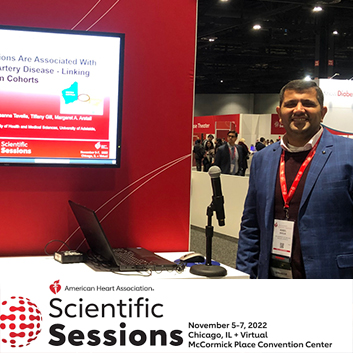
As a final year PhD student, it was an amazing experience to attend and present at the American Heart Association (AHA) Scientific Sessions 2022 held from November 04 to 07, 2022 in Chicago, Illinois, USA and that too after almost 3 years.

My moderated digital poster presentation entitled “Pregnancy Complications Are Associated With Premature Coronary Artery Disease – Linking Three South Australian Cohorts” was held on Monday, November 07, 2022 in the Multi-Generational Cardiovascular Risk: Pregnancy and Childhood session. It was an honour to present at the flagship cardiology conference and to receive meaningful feedback and suggestions from some of the great experts in the field. This unique data linkage project merging three South Australian registries forms a major component of my PhD thesis and it was the first time I presented at an international conference as part of my PhD candidature.

In addition, I also got a chance to meet with Prof Salim Virani who works in the area of cardiovascular research at the Baylor College of Medicine (BCM), Houston, Texas. We had a good discussion regarding premature coronary heart disease registry at BCM, Houston exploring ways to compare it with the South Australian registry and later with the South- East Asian registries (including Pakistan and India). We also had some discussion on post-doctoral opportunities in USA particularly at BCM, Houston which he was aware of and highlighted potential opportunities. I also attended some nice poster sessions on epidemiology and public health, rapid-fire presentations on mHealth and community based interventions on achieving lifestyle goals and evidence-based clinical sessions. Overall, it was an amazing experience to be part of such a prestigious cardiology conference.
View Adeel’s abstract here in AHA’s Journal, Circulation

Justin Braver – AHA 2022 Travelling Fellowship Report

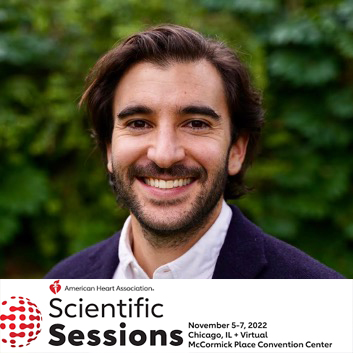
Mr Justin Braver (VIC) at AHA 2022

Attending the AHA 2022 conference in Chicago was a privilege and I am grateful to the CSANZ for supporting my attendance via a Travelling Fellowship. I am a physiotherapist by background, undertaking a PhD at The University of Melbourne in the Baker Department of Cardiometabolic Health.

My research is exploring the effectiveness of disease management programs that incorporate digital health to prevent recurring cardiovascular events and mortality in patients with an acute coronary syndrome. I concurrently work in industry for a health insurer, whereby I design and implement remotely delivered preventative health programs.

At the AHA, I presented my research in the “Digital Health to Manage Cardiovascular Disease” session. The aim of this study was to assess the effectiveness of a 6-8 week digitally enabled cardiac rehabilitation program on improving risk factors and health status in patients who were hospitalized for coronary artery disease in Australia. Longer term follow-up over 12 months for hospital readmissions and mortality was also evaluated. All participants had private health insurance hospital cover with one provider. We showed that a digitally enabled cardiac rehab program improved clinical, behavioral and lifestyle risk factors. There was also a trend towards lower readmissions and mortality rates in people who undertook either the digitally enabled program or a traditional face-to-face cardiac rehab program compared to a propensity matched control group who did not undertake any cardiac rehabilitation program.

My area of interest at the conference centred around digital health to improve CVD outcomes. Leading researchers from Stanford, Johns Hopkins and the Cleveland Clinic presented on key themes, namely digital health equity (“techequity”), patient centred design, wearables (including their use across the health journey from wellbeing, diagnostics & disease management) and a lot of discussion on the influence of sleep for heart health. Moreover, it was interesting to learn that many of the same challenges that we face here in Australia are also felt globally. The issues around the underutilisation of cardiac rehab and the importance of co-design when developing digitally enabled healthcare programs are key for preventing recurrent events and mortality in patients suffering from acute coronary syndromes.

View Justin’s Abstract, “Effectiveness of a Digital Health Enabled Cardiac Rehabilitation Program in Reducing Recurrent Events For Private Health Insurance Patients in Australia” in AHA Journal, Circulation on the link here and below: https://www.ahajournals.org/doi/abs/10.1161/circ.146.suppl_1.12446?af=R

Cardiovascular Nursing and Climate Change: a call to action from the CSANZ Cardiovascular Nursing Council

Cardiovascular Nursing and Climate Change:  a call to action from the CSANZ Cardiovascular Nursing Council.

Summary by Prof Rochelle Wynne December 2022

Environmental health ultimately determines human health. As our climate continues to deteriorate, climate hazards and disasters provide acute triggers for patients with cardiovascular disease (CVD) that are compounded by social determinants of health.

Nurses provide a critical juncture for future solution focused co-design. To avoid harm, we need to have a holistic view of vulnerability, recognise what influences resilience, and appreciate the synergistic effects of climate change on CVD.

In a special issue of Heart, Lung and Circulation dedicated to the environment, this call-to-action claims that unprecedented should not be an excuse for unprepared. In harnessing the power, skill and expertise of the nursing profession, healthcare professionals who are both part of the solution and the problem, can transect acute and primary care to lead positive change.

Vulnerable populations are at greatest risk and targeted preventative support is needed. First Nations people must have sovereignty over their response to climate change. Healthcare professionals need to understand the impact of climate change on First Nations peoples and ensure care is culturally appropriate.

Education is the cornerstone to mitigating the impact of climate change on healthcare outcomes as it creates opportunities to reduce the risk of hazards and establish strategies for safety.

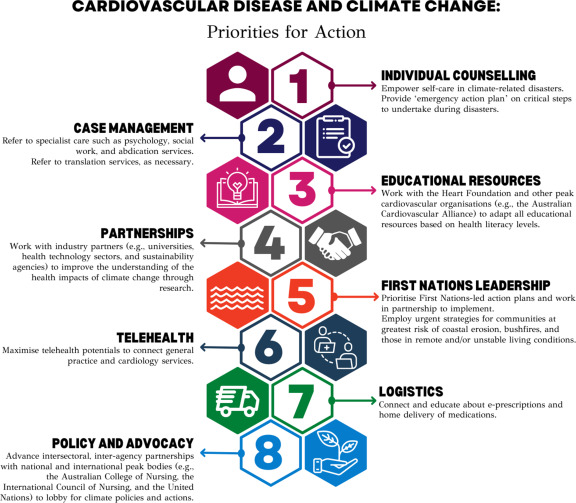
Urgent practice adaptation that includes climate-aware assessment, education, discharge planning and care coordination as usual practice is imperative. Professionals who manage the consequences of climate change must also understand the impact of their care on the root cause of the problem. As we adapt our care to reduce environmental impact nurses are well placed to lead interdisciplinary planning and this paper highlights priorities for action to improve awareness and empower self-care in climate related disasters.

Read in full at Heart, Lung and Circulation here – https://www.heartlungcirc.org/article/S1443-9506(22)01137-4/fulltext 

Authors: Sally C. Inglis, PhD, Caleb Ferguson, PhD, Rebecca Eddington, MHLth, Julee McDonagh, PhD, Chris J. Aldridge, Kimberley Bardsley,  Dion Candelaria, MN, Y.Y. Chen, PhD,  Robyn A. Clark, PhD, Elizabeth Halcomb, PhD, Jeroen M. Hendriks, PhD.  Louise D. Hickman, PhD, Rochelle Wynne, PhD.

Lipids Year in Review 2022, with commentary by A/Prof John Amerena

In this issue:

  • Lipid lowering effects of obicetrapib with high-intensity statin
  • HDL-C levels and adverse CV outcomes
  • Coronary plaques, LDL-C levels and CVD events
  • LDL-C and CV and renal outcomes in moderate CKD
  • Lipoprotein(a), DAPT and outcomes after drug-eluting stent
  • Bempedoic acid for patients not receiving statins
  • Attainment of LDL-C goals with combination therapy
  • Lipoprotein(a) in ASCVD and aortic stenosis
  • Lipoprotein(a) levels in a global population
  • Pharmacotherapy in type 2 diabetes and ASCVD
  • Attainment of lipid targets following CABG surgery
  • Association of lipoprotein(a) with atherosclerotic plaque progression
  • Early statin therapy in ACS patients
  • Moderate-intensity statin + ezetimibe vs high-intensity statin in ASCVD
  • Protective effects of statins on COVID-19

Download the Lipids Year in Review 2022, with commentary by A/Prof John Amerena (pdf)

Cardiovascular Research Review: Issue 148 with a focus on Covid-19, with commentary by Prof David Brieger

In this issue:

  • Diagnosing CVD during the COVID-19 pandemic
  • Impact of COVID-19 in hospital mortality CVD
  • Post-COVID-19 syndrome and cardiac fatigue
  • Long-term CVD outcomes in unvaccinated COVID-19 survivors
  • Thrombosis, thrombocytopenia syndrome, thromboembolic events, and the different COVID-19 vaccines
  • Obesity and severe long- COVID-19 in patients with ARDS
  • Future for COVID-19 vaccines
  • Lessons from the COVID-19 health response
  • Low-dose aspirin and severe COVID-19
  • COVID-19 and major arterial and VTEs

Download Cardiovascular Research Review: Issue 148 with a focus on Covid-19, with commentary by Prof David Brieger

Cardiovascular Research Review: Issue 147, with commentary by A/Prof John Amerena

In this edition:

  • Wearable devices may help detect AF
  • Polypill strategy for secondary prevention
  • Rivaroxaban vs VKA in patients with rheumatic heart disease and AF
  • Mortality in patients with recent acute MI receiving antithrombotic therapy
  • Aspirin for primary prevention in relation to lipoprotein(a) genotypes
  • Early rhythm control for AF
  • Morning vs evening dosing of antihypertensives
  • Up-titration of guideline-directed medical therapies for acute HF
  • Comparative efficacy and safety of DOACs in patients with AF
  • BP lowering and prevention of dementia

Download the Cardiology Research Review: Issue 147, with commentary by A/Prof John Amerena (pdf) 

New and amended PBS Listings | 1 Dec 2022

Click here for a summary of the new and amended Pharmaceutical Benefits Scheme (PBS) listings that may relate to your practice, including heart failure, hypertension and hypercholesterolaemia.

For further information on broader PBS changes, please visit the PBS website.

Also please note relevant information and authority application forms have been updated and can be accessed through the Services Australia website.

Download FAQs from PBS Online 

Global shortage of Ozempic (semaglutide) and Trulicity (dulaglutide).

The Therapeutic Goods Administration (TGA) is working with pharmaceuticals and medical organisations to reduce the impact of the global shortage of the two diabetic medicines: Ozempic (semaglutide) and Trulicity (dulaglutide).

NB: There will be no further supplies of Ozempic available in Australia and access to Trulicity is expected to be very limited until the end of March 2023.

Please help disseminate this information out to patients to allow time to access alternative treatments. TGA has published two webpages (links below) providing practical information and advice about these shortages including a link to new clinical guidelines from RACGP:

Ozempic (semaglutide) shortage web page
Trulicity (dulaglutide) shortage web page

If you have any questions, please contact the Medicine Shortages Section on +612 6289 4646 [email protected].

ECG of the Month – November 2022

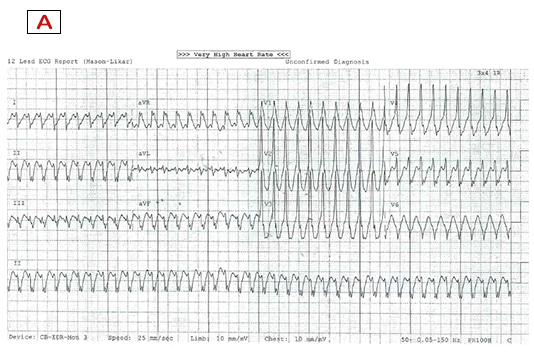
A 16 year old girl with a history of recurrent paroxysmal palpitations and a structurally normal heart has the following 12-lead ECG recorded during an especially severe episode for which she obtained urgent medical assistance.

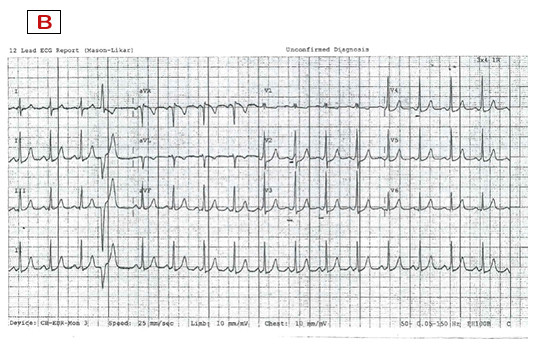
Following electrical cardioversion, the following sinus rhythm trace is obtained.

Which of the following is the correct diagnosis?

a)    Ventricular tachycardia
b)    Antidromic AV reentrant tachycardia
c)    Preexcited atrial flutter
d)    Orthodromic AV reentrant tachycardia with aberrance
e)    AV nodal reentry tachycardia with aberrance

Explanation:

Panel A displays a very rapid, regular broad complex tachycardia at 250bpm. The differential diagnosis includes (i) ventricular tachycardia (VT), (ii) supraventricular tachycardia (SVT) with aberrance, and (iii) preexcited tachycardia. Note that (ii) is a two-part diagnosis i.e. it requires the presence of SVT along with aberrance, as without aberrance, SVT presents as a narrow complex tachycardia.
The term ‘aberrance’ conventionally refers to a functional block or delay in the bundle branches during tachycardia but which is not present in sinus rhythm. Functional bundle branch blocks display similar QRS morphology to fixed bundle branch blocks. Consequently,  morphology criteria consistent with a typical right or left bundle branch block should be present to diagnose SVT with aberrance as the mechanism of any broad complex tachycardia.
In Panel A, we see a monophasic R in V1 (rather than the typical rsR’ of a right bundle branch block) and a QS in V6 (rather than the typical Rs or rS). It is axiomatic that the presence of a QS pattern in V6 is strong evidence against aberrance as no combination of bundle branch or fascicular blocks can cause wavefront propagation to proceed entirely away from the normally latest activating posterolateral left ventricular region that is closest to V6. Thus the QRS morphology is not consistent with aberrance and hence d) and e) can be excluded.
Panel B shows preexcitation in sinus rhythm with a short PR interval and delta waves. Combined with presence of symptomatic tachycardia, this establishes the diagnosis of Wolf-Parkinson-White syndrome. The positive delta wave and QRS in lead V1 and the inferior limb leads suggests the presence of a left lateral bypass tract with a ventricular insertion into the anterolateral (or superolateral) mitral annulus.
Both b) and c) are forms of preexcited tachycardia. This collection of tachycardias is defined by the presence of any antegrade (atrial to ventricular) conduction over a manifest bypass tract (accessory pathway) during broad complex tachycardia. This term is not mechanism specific and refers to a group of rhythms that exhibit at least some degree of preexcitation during tachycardia. Of these, only b) antidromic AV reentrant tachycardia exhibits ventricular activation entirely and solely over the bypass tract. This is because the AV conduction system is used retrogradely for activation of the atrium before reentry back to the ventricle over the bypass tract. As a result no antegrade conduction can occur over the AV conduction system during antidromic reentrant tachycardia.
It should be noted that, from the perspective of the ventricle, antidromic tachycardia is indistinguishable from option a) above, namely a focal ventricular tachycardia arising from a point source at the AV annulus. Such idiopathic ventricular tachycardias occur in structurally normal hearts.
Closer examination of the QRS morphology during tachycardia reveals a sharp intrinsicoid deflection in a number of limb leads and V5, in addition to a delta wave-like morphology with slurry initial forces across the majority of the precordial leads. This overall appearance is inconsistent with ventricular activation solely over a left lateral bypass tract (as it does in antidromic AV reentry tachycardia) or solely from a point source origin at the annulus (as it does in focal ventricular tachycardia). On the contrary, it implies that fusion is occurring in the ventricle with wavefront contributions from the both the bypass tract and AV conduction system during each cycle of tachycardia. Options a) and b) can thus also be excluded leaving c) preexcited atrial flutter (also known as atrial flutter with bystander preexcitation).
The diagnosis is also supported by the rapid rate and subtle suggestion of typical flutter waves in the inferior leads. This  patient’s young and otherwise healthy AV conduction system was able to conduct atrial flutter 1:1 to the ventricle as evidenced by the constant fusion in each QRS with conduction over the bypass tract.
This case highlights the importance of detailed and accurate QRS morphology assessment in diagnosing the mechanism of broad complex tachycardias.
An uncomplicated catheter ablation of the left lateral bypass tract was performed and she has had no recurrence of tachycardia or preexcitation at 1 year follow up.

The Answer:      c) Preexcited atrial flutter

Go to CSANZ Imaging Forum to discuss or post a question to A/Prof Haris Haqqani

Posts navigation