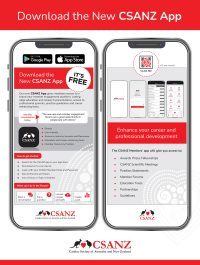
Download the CSANZ Member APP

The CSANZ App has been designed for members to access information, network and collaborate. The App provides members with a range of information, career enhancing and engagement tools including:
  • Engagement and discussion forums
  • Guidelines and position statements
  • Heart Lung and Circulation Journal
  • Cardiology and Member News
  • Education and Career Resources
  • Scientific Meeting Presentations
  • Membership information and billing
Boston Scientific ACCOLADE™, PROPONENT™, ESSENTIO™ & ALTRUA 2™ pacemakers and VISIONIST™ and VALITUDE™ CRTPs (June 2021)

Expansion of issue reported in 2018. hydrogen-induced accelerated battery depletion. No follow up change required

ANZCDACC Advisory Expansion June 2021

Download June 2021 as pdf

 Download previous of 2018 

Device: Boston Scientific ACCOLADE™, PROPONENT™, ESSENTIO™ & ALTRUA 2™ pacemakers and VISIONIST™ and VALITUDE™ CRTPs.

Model numbers: L100, L101, L110, L111, L121, L131, L200, L201, L209, L210, L211, L231, L300, L301, L310, L311, L321, L331, S701, S702, S722, U125, U128, U225, U226, U228.


TGA Reference: RC-2021-RN-01304-1

Australian Register of Therapeutic Goods (ARTG): 280319, 280316, 280315, 279330, 279331 and 279332

Boston Scientific dual chamber INGENIO™ family pacemakers and CRTPs (June 2021)

May initiate Safety Mode related to telemetry attempts.  Basic therapy is still provided in Safety Mode, replacement is required.

ANZCDACC Implant Hazard Alert June 2021

Download as pdf

Device: Boston Scientific dual chamber INGENIO™ family pacemakers and Cardiac resynchronisation (CRTPs).

Models: ADVANTIO DR EL (K084, K087), INGENIO DR EL (K184, K187), VITALIO DR EL (K287), INVIVE CRT-P (V182, V183)

 TGA Reference: RC-2021-RN-01305-1


Abbott / St Jude Medical Assurity ™ and Endurity ™ Pacemakers (15 March 2021)

Incomplete epoxy mixing causing moisture into header, causing loss of telemetry, reduced longevity, loss of pacing and shorter ERI to EOS time

ANZCDACC Field Safety Notice 15 March 2021

Download as pdf

Device:

A subset of Abbott / St Jude Medical Assurity™ and Endurity™ Pacemakers
Models: PM1160, PM1172, PM1240, PM1272, PM2160, PM2172, PM2240, PM2260*, PM2272

TGA Reference: RC-2021-RN-00728-1
Australian Register of Therapeutic Goods (ARTG): 216288, 267515, 216284, 267512, 216289, 267514, 216285, 216287*, 267513
*TGA listing cancelled in June 2019

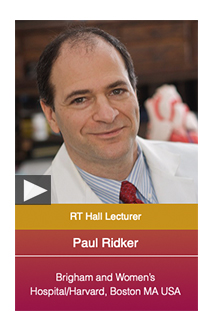
CSANZ 2020: R T Hall Lecture

Dr Paul Ridker, Director, Center For Cardiovascular Disease Prevention
Brigham and Women’s Hospital

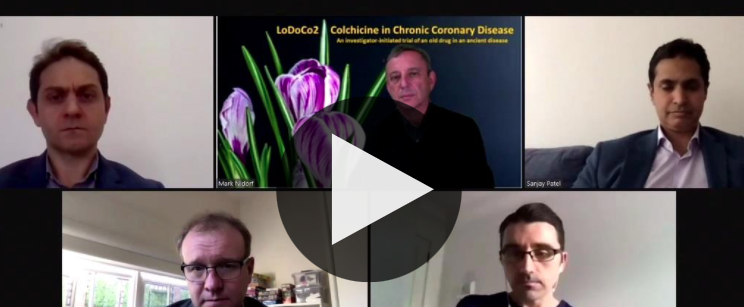
RT Hall Lecture:  100 years from C-reactive protein to anti-cytokine therapy for atherosclerosis: A history of discovery

(Click above link to view)

Biography

Over the past 25 years, Dr. Paul Ridker has been collaboratively responsible for elucidating the critical role of inflammation in the detection, prevention, and treatment of cardiovascular diseases. Best known for his pioneering population biology work on inflammatory biomarkers such as high-sensitivity CRP and interleukin-6, the first demonstrations of the anti-inflammatory effects of statins, the guideline changing JUPITER trial in 2008, and ultimately through the CANTOS interleukin-1b inhibition trial in 2017. 

Dr. Ridker’s work has led to a fundamental shift in our understanding of atherosclerosis and to the first proof that targeted anti-cytokine therapies can lower cardiovascular event rates in the absence of lipid lowering. Insights from his group that the magnitude of inflammation inhibition directly relates to the magnitude of clinical benefit has spawned a novel class of cardiovascular therapeutics, led to the clinical recognition that “residual inflammatory risk” is a separate and distinct entity from “residual cholesterol risk”, and opened an entirely novel approach to the treatment of inflammatory lung cancers. 

Spanning the fields of epidemiology, vascular biology, population genetics, public health, preventive medicine, and clinical trials, Dr. Ridker’s career-long focus on inflammatory mechanisms of disease has advanced a controversial concept into a proven clinical intervention. Few clinical investigators have had as much translational influence at the bench, the bedside, and on guidelines for the prevention and treatment of cardiovascular disease.

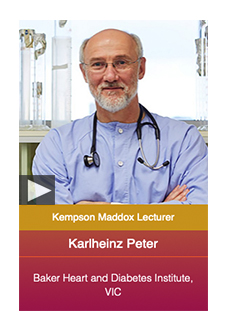
CSANZ 2020: Kempson Maddox Lecture by Prof Karlheinz Peter

Prof Karlheinz Peter, Deputy Director, Baker Heart and Diabetes Institute

Kempson Maddox Lecture : Prevention and treatment of myocardial infarction – pitfalls of the past, present challenges and future opportunities
(Click above link to view)
Biography

Prof Karlheinz Peter is an interventional cardiologist at the Alfred Hospital and a basic scientist and Deputy Director at the Baker Heart and Diabetes Institute. He is Professor of Medicine and Immunology at Monash University, honorary Professor at La Trobe University, and he holds an NHMRC principal research fellowship. Prof Peter has been working for many years and continues to work as an interventional cardiologist, including previously as the head of the cardiac catheter laboratory at the University of Freiburg, Germany. He did his postdoctoral training at Johns Hopkins University, Baltimore and at Scripps Research Foundation, La Jolla, USA. He did most of his clinical training at the University of Heidelberg, Germany.

His research is focused on the cellular mechanisms of coronary artery disease and its consequences, myocardial infarction (MI), encompassing the role of platelets, coagulation and inflammation in atherosclerosis, as well as the mechanisms leading to the rupture of atherosclerotic plaques. Together with Dr Chen he developed a unique mouse model of plaque instability/rupture that closely reflects human plaque instability. He has developed novel biomarker (proteomic and microRNA) approaches and molecular imaging strategies using MRI, ultrasound, CT and PET towards the localisation of thrombi, inflammatory reactions and vulnerable, rupture-prone plaques and the identification of patients at risk of MI. 

One of his primary research interests is the development of new “intelligent” drugs for patients with MI. He has developed human single-chain antibody drugs that demonstrate highly promising properties with high anti-platelet, anticoagulant and fibrinolytic efficacy but reduced side effects, particularly bleeding complications. With his clinical background, his knowledge in pharmacology and his expertise in biotechnological methods, Prof Peter is uniquely placed for translational research. His work is the basis of several patent applications covering diagnostic tests/imaging for the detection of thrombi, vulnerable plaques and inflammatory reactions and site-directed therapy.

Posts navigation