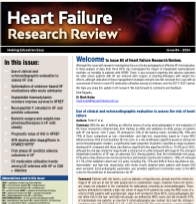
Heart Failure Research Review, Issue 84, with commentary by Dr Mark Nolan

In this edition

–  Use of clinical and echocardiographic evaluation to assess HF risk
–  Optimisation of evidence-based HF medications after acute admission
–  Implantable haemodynamic monitors improve survival in HFREF
–  Neuropeptide Y: elevated in HF and predicts outcomes
–  Bariatric surgery and weight-loss pharmacotherapies in HF with obesity
–  Prognostic value of HGI in HFREF
–  GFR decline after dapagliflozin in HFMREF/HFPEF
–  First-phase EF predicts adverse outcomes in HF
–  CV medication utilisation trends among US veterans with HF or CAD + diabetes

Download the Heart Failure Research Review here

SPOTLIGHT ON : Women in Cardiology (WiC) Working Group

Did you know that we have a vibrant and enthusiastic Working Group dedicated to improving equity for women at all levels of the career journey?   

Our goal is to engage a higher representation of women in Cardiology, given we have the lowest level of representation amongst all Medical specialties. Currently, only 15% of all cardiologists are women, with only 5% specialising as interventional cardiologists.

Chair:  Dr Sonya Burgess, an interventional cardiologist based in Sydney.

Steering Committee:  Dr Sarah Zaman, Dr Clara Chow, Dr Anastasia Mihailidou, Dr Rebecca Kozor, Dr Swati Mukherjee, Dr Belinda Gray, Dr Elizabeth Shaw, Dr Ruth Arnold, Dr Alicia Chan, Dr Cara Barnes, Dr Louise Segan, Dr Jain Manali, Dr Anastasia Vlachadis-Castles, Dr Lynne Pressley and Dr Rebecca Jedwab.

The focus of the Working Group is to have the CSANZ Board, and members, to support women and improve representation of women in cardiology at all levels – from conference invitations to committee membership, policies, equity and future leaders.

There are plans to coordinate preparing a WiC day focused on interview skills CV preparation for advanced trainee, fellowships, and early career positions, with a workshop and skills day led by Dr Rebecca Kozor and Dr Sonya Burgess.

We also wish to encourage having a network where the offline conversations, mentoring, and sponsorship can grow.

We look forward to welcoming you to our WiC Working Group.  There are no exclusions!  If you are interested to join us on our mission, please contact:  [email protected]  or contact her via the Nepean Hospital on +612 4734 2000.

One of the most rewarding changes we have seen, as we try to achieve more equity and diversity in cardiology, is that it generates mentoring and support. We have had women in Cardiology at all levels reaching out to members of this group with questions, requests for data, support and further plans for research and networking.

In Australia and New Zealand, women are still under-represented at trainee level and published modelling, based on Australian data, suggests the rate of change is underwhelming. We currently are unlikely to reach gender parity for at least 50 years, and our rate of change is worse than that of Surgery.  

There is longstanding evidence of inequity for women seeking careers in Cardiology.

Research shows women are under-represented at consultant, trainee level and professor promotion. Research also shows that in Cardiology we have ongoing cultural issues, including conscious and unconscious bias, that as a specialty we are yet to successfully address. These issues have an impact on outcomes for our colleagues, trainees, students and patients.

Importantly, changes are happening, in individual departments and hospitals throughout our countries, in our policies and systems, and in our conference committees as we all try to facilitate positive change.

One recent example of a WiC initiative supported by NSW cardiology heads of department, led by Dr Tom Ford, were changes to the under-representation of women at the Heads of Department “cull meeting” . This meeting considers, grades, and ranks all applicants for Advanced Training positions in Cardiology for advanced trainee positions in New South Wales. Of the large 12-15 person voting panel, there was only one-woman representative. As NSW health policy for recruitment and training aims to avoid poor representation of women on interview panels by stipulating on a 5-person panel, at least one voting panellist should be a man, and at least one person should be a woman. The CSANZ WiC group requested that for the panels, such as the cull meeting, that similar minimal ratios should be sought and the voting committee members should not be greater than 80% male (or greater than 80% female), based on the minimum 1:4 ratio within NSW policy. The CSANZ WiC group worked together with Dr Tom Ford (who chairs this meeting) and all of the Department Heads, which led to greater than 20% of the panel for were women this year for the first time. 

As a group, we are working on increasing visibility on the both the national and international stage, to provide supportive role models for the next generation of not only Cardiology trainees but all women in cardiology, including nursing, allied health and research and more equity focused research and research funding.

In 2023, we have seen members of our steering committee actively working on these goals. Our proudest moments come when we see our trainees/mentees/students doing well and breaking their own glass ceilings.

For example, in 2024 Dr Roopa Krishnamoorthy will become the first female advanced trainee to take up an interventional cardiology fellowship at Nepean Hospital, and start her journey in interventional cardiology.

Our Steering Committee members are recognised both at national & international levels, and are recognised leaders in the Cardiology field or rising stars.
  • Dr Sonya Burgess, Chair WiC group, presented as faculty at TCT2023, one of the premier interventional congresses and had her STEMI papers cited in 2023 ESC guidelines, co-authored an EAPCI position paper on radiation safety (1) and secured funding and started early data collection for occupational radiation safety in pregnancy research.
  • Dr Sarah Zaman is invited as one of 21 Lancet Commissioners on the Lancet Commission on Atherosclerotic Heart Disease and has been included in CSANZ STEMI guideline committee.
  • Dr Elizabeth Shaw, our first Australian interventional cardiologist to perform TAVI has now also become the second female Head of Cardiology Department in New South Wales.
  • Dr Anastasia Mihailidou was invited Discussant at the American Heart Association Late Breaking Science this year and Keynote presentation at the 10th National Prevention Conference in Ireland. She also was one of the invited Faculty to review the content for the World Health Organisation technical specifications for pre-market assessment of blood pressure measuring devices (2).
  • Dr Ruth Arnold was the first female Head of department of Cardiology at Orange Health Service and successfully lead the initiative to include more women at the head of department cull meeting. Dr Arnold received an OAM for services to rural cardiology. With her colleague Dr David Amos, she has worked to establish an accredited rural advanced trainee position based at Orange and linked to RPAH. This is the first rural hospital to be able to recruit advanced trainees. She is hoping to expand the rurally based training program across western NSW.   
  • Dr Clara Chow received an OAM for her service to medicine and research, and was appointed as a new Fellow by The Australian Academy of Health and Medical Sciences and was Digital Health Technology Award Finalist.
  • Dr Rebecca Jedwab is a Critical Care Registered Nurse and PhD (Nursing) graduate from Deakin University. She is a Fellow of the Australian College of Nursing and passionate about advancing mentorship, professional development and research within her healthcare organisation.
  • Dr Louise Segan received the Baker Heart and Diabetes Institute Bright Sparks Scholarship Recipient and Baker Research Forum quarterly prize winner as well as APHRS Young Investigator Award 2023. Louise is one of our rising shining stars with having first author on original research published in European Heart Journal this year (3). 
  • Dr Alicia Chan is a co-author of the Australian Consensus on the Management of Heart Failure, active in the heart failure and pacing/cardiac devices space and is a board member of CSANZ and National Heart Foundation (SA).
  • Dr Belinda Gray is current Chair of the CSANZ genetics council and Heart Foundation Future Leader. Dr Gray was also the Australian lead and only Australian author for the recent LIVE-HCM- large multicentre international study assessing safety of vigorous exercise in hypertrophic cardiomyopathy which will bring change in clinical practice (4).
  • Dr Swati Mukheriee is the first woman of colour to qualify as an interventional cardiologist in Australia and New Zealand, and the first female interventionalist to be awarded a prestigious SCAl-USA Fellowship in recognition of interventional cardiology excellence. Dr Mukherjee is co- chair of the CSANZ Equity, Diversity and Culture Committee and member of Gender Equity in Medicine Committee of the Royal Australian College of Physicians (RACP).

References
1. Manzo-Silberman S, Velázquez M, Burgess S, et al (2023). Radiation protection for healthcare professionals working in catheterisation laboratories during pregnancy: a statement of the European Association of Percutaneous Cardiovascular Interventions (EAPCI) in collaboration with the European Heart Rhythm Association (EHRA), the European Association of Cardiovascular Imaging (EACVI), the ESC Regulatory Affairs Committee and Women as One. EuroIntervention; 19(1):53-62. 

2. WHO (2023). Technical specifications for pre-market assessment of blood pressure measuring device with cuff, automated and semi-automated. 

3. Segan L et al. (2023) New-onset atrial fibrillation prediction: the HARMS2-AF risk score. Eur Heart J; 44:3443-3452 

4. Lampert R, Ackerman MJ, Marino BS, Burg M, Ainsworth B, Salberg L, Tome Esteban MT, Ho CY, Abraham R, Balaji S, Barth C, Berul CI, Bos M, Cannom D, Choudhury L, Concannon M, Cooper R, Czosek RJ, Dubin AM, Dziura J, Eidem B, Emery MS, Estes NAM, Etheridge SP, Geske JB, Gray B, Hall K, Harmon KG, James CA, Lal AK, Law IH, Li F, Link MS, McKenna WJ, Molossi S, Olshansky B, Ommen SR, Saarel EV, Saberi S, Simone L, Tomaselli G, Ware JS, Zipes DP, Day SM; LIVE Consortium. Vigorous Exercise in Patients With Hypertrophic Cardiomyopathy. JAMA Cardiol. 2023;8(6):595-605   

Cardiology Practice Review: Issue 32, with commentary by A/Prof John Amerena

In this issue:

  • 2023 ESC guidelines for managing endocarditis
  • 2023 ESC guidelines for ACS
  • Guideline for diagnosing and managing AF
  • Expert consensus statement on cardiac catheterisation for CHD
  • Urgent ECMO after cardiogenic shock admission could lower mortality
  • Increasing lipids with risk of worsening cardiac damage in adolescents
  • New warnings of romosozumab (Evenity) CV risks
  • ESC guidelines and documents planned for 2024
  • Real-world incidence of severe QT prolongation in patients taking antipsychotic drugs
  • Chronic hypertension and the risk of readmission for postpartum CV complications
  • Utility of smartwatches for identifying arrhythmias in children
  • COVID-19 resources

Download Cardiology Practice Review: Issue 32

Babyscreen+ research study: Genomic Newborn Screening

Share your knowledge and expertise through 30-minute interviews to help shape the future of genomic newborn screening in Victoria.

The BabyScreen+ study is investigating the best way to deliver a genomic newborn screening program to all babies in Victoria.

We want to understand the acceptability of models of genomic newborn screening amongst health professionals whose clinical practice may be impacted by the results of this screening.

We would like to invite paediatricians, specialists, and general practitioners in Victoria to take part in a 30-minute interview by phone or videoconference.

To participate in an interview, please email Nathasha at: [email protected] to organise a time and review the participant information statement.

This study has received ethical approval from the Royal Children’s Hospital Human Research Ethics Committee (HREC Project Number: 91500).

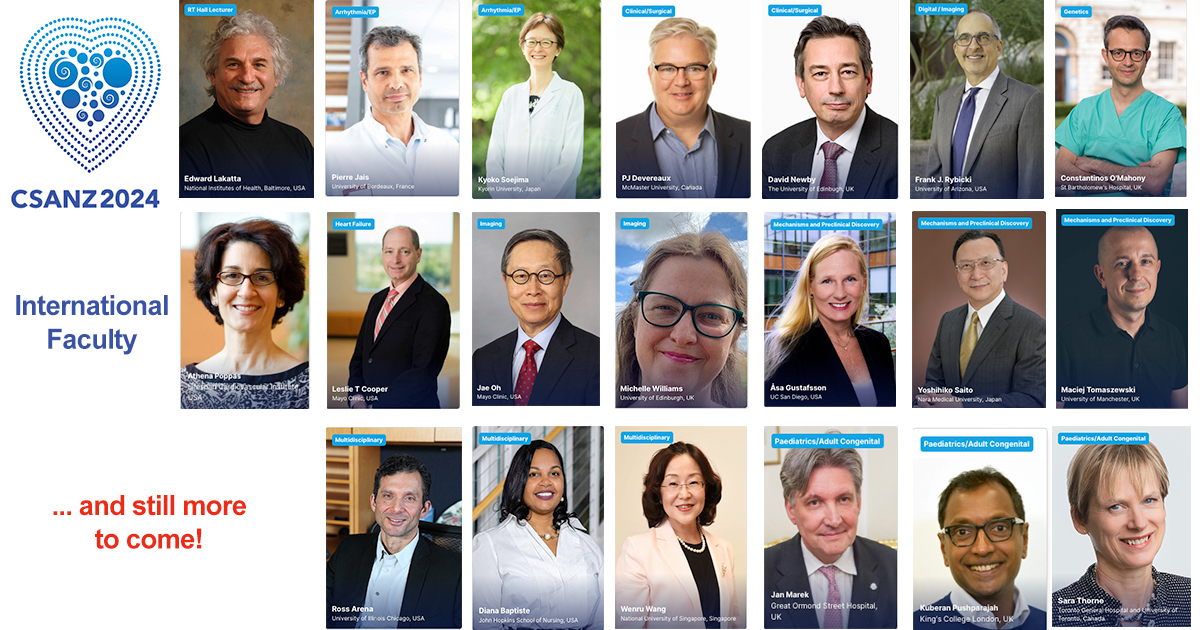
#CSANZ2024 | International Faculty

Keep your eye on the CSANZ ASM 2024 as the International Speakers confirm their attendance in Perth from 1 – 4 August 2024.
Abstracts are filing into the Conference Abstract Portal  – don’t miss this opportunity to get your research in front of all the experts. Start planning your trip to WA!

Join us for the 2024 CSANZ ASM and ANZET24 in Perth from 1-4 August 2024.

csanzasm.com     anzet.com.au

Australian Cardiology Practice Review Issue 32, with commentary by A/Prof John Amerena

In this issue we feature:

–  2023 ESC guidelines for managing endocarditis
–  2023 ESC guidelines for ACS
–  Guideline for diagnosing and managing AF
–  Expert consensus statement on cardiac catheterisation for CHD
–  Urgent ECMO after cardiogenic shock admission could lower mortality
–  Increasing lipids with risk of worsening cardiac damage in adolescents
–  New warnings of romosozumab (Evenity) CV risks
–  ESC guidelines and documents planned for 2024
–  Real-world incidence of severe QT prolongation in patients taking antipsychotic drugs
–  Chronic hypertension and the risk of readmission for postpartum CV complications
–  Utility of smartwatches for identifying arrhythmias in children
–  COVID-19 resources
–  Conferences, workshops and CPD

Download the pdf here

The Australian National Standards of Care for Childhood-Onset Heart Disease (CoHD)

Announced by the Federal Health Minister last week and published in the Heart, Lung and Circulation, The Australian National Standards of Care for Childhood-Onset Heart Disease can be viewed see full text link below.

https://www.heartlungcirc.org/article/S1443-9506(23)04355-X/fulltext
Further to this read commentary below in an editorial by Prof David Celermajer.

National Standards of Care for Childhood onset Heart Disease (CoHD)—A New Paradigm Whereby Healthcare Professionals, Governments and Consumers Work Together to Optimise Patient Care. https://doi.org/10.1016/j.hlc.2024.01.015

Cardiology Research Review Issue 161, with commentary by A/Prof John Amerena

In this edition:

–  Safety and tolerability of inclisiran in patients with hypercholesterolaemia
–  Intravascular imaging, functional, or angiographically guided coronary intervention
–  Educational attainment and lifetime risk of cardiovascular disease
–  Impact of bempedoic acid on cardiovascular events
–  Five-year follow-up after TAVI in low-risk patients
–  Effect of dietary sodium on blood pressure
–  Long-term outcomes of resynchronisation–defibrillation for heart failure
–  Risk of severe QT prolongation with quetiapine and haloperidol
–  Use of artificial intelligence to predict AF
–  No increased risk of suicidal ideation with semaglutide

Download the Cardiology Research Review Issue 161, with commentary by A/Prof John Amerena

2025 ANZET-UK Fellowships

Position: 2025 ANZET-UK Fellowships
Applications are invited for two prestigious one-year Fellowships at Leeds General Infirmary, UK:
• ANZET-UK Structural Fellowship
• ANZET-UK Intervention Fellowship
Leeds General Infirmary is a large tertiary cardiac centre in the United Kingdom, providing services to a population of 2.8 million in West Yorkshire, with supra-regional services to the broader population of Yorkshire & Humber, constituting 5.8 million.
The Fellowships are open to all Australian and New Zealand interventional trainees.
The proposed start date of the Fellowships is February 2025, although some flexibility depending on the preference of the successful candidate is possible.
1. ANZET-UK STRUCTURAL FELLOWSHIP
The trans-catheter valve programme in Leeds is led by Professor Dan Blackman ([email protected]), working with fellow interventional cardiologists Dr Chris Malkin, Dr Mike Cunnington, and Dr Noman Ali, and echocardiologists Dr Dominik Schlosshan and Dr James O’Neill.
This Fellowship will be focussed on trans-catheter valve intervention, in particular trans-catheter aortic valve implantation (TAVI). Leeds performs over 500 TAVI procedures annually. Currently Evolut, SAPIEN 3, Navitor, JenaValve Trilogy, and MyVal Octacorvalves are used. TAVI procedures are performed under local anaesthetic. More than 95% of procedures are trans-femoral, with percutaneous axillary access the alternate access route of choice. Leeds has a strong record of innovation in TAVI, having been the first centre in the UK to use Lotus, undertaken the first-in-human Evolut study, the first-in-human Triguard cerebral embolic protection study, and been at the forefront of cerebral embolic protection and subclavian access. There is an active research programme supported by 5 research nurses, with multiple peer-reviewed publications in the field.
The Fellow would participate in all TAVI procedures, and would be trained in all aspects of TAVI. Amongst the 500+ cases in the 12-month post, the Fellow could expect to perform a minimum of 150 cases as 1st operator, and be able to function as an independent 1st operator at the end of the year’s programme.
Leeds has a growing mitral intervention programme. Transcatheter Edge to Edge Repair was started in 2018, and Leeds was approved in 2022 as the sole centre for the 5.8 million population of Yorkshire & Humber, with 40 procedures currently performed annually. Leeds has also been involved in trials of the Carillon and Millipede mitral annuloplasty devices, and trans-catheter mitral valve replacement (TMVR) with the Medtronic Intrepid and High-Life valves. We are currently recruiting to theAPOLLO-EU Intrepid trial. Mitral valvuloplasty is also performed, as are TAVI-in-Mitral valve and ring procedures. Tricuspid intervention has been performed with the Tricinch device, with tricuspid TEER due to start in 2024, alongside potential TTVR with Cardiovalve and/or Evoque.
The Fellow would be involved in all mitral and tricuspid procedures, and would gain experience in trans-septal puncture and mitral intervention.
Non-valve structural interventions, such as LAAO, PFO and ASD closure, are undertaken by a separate adult congenital intervention team in Leeds. Some exposure to these interventions may be available.
The Fellowship would also offer continued involvement in PCI, in order to maintain expertise. However, it will not offer full training in PCI to more junior trainees, since the focus is on structural intervention. Currently 2300 PCIs are performed in Leeds annually, including 1100 primary PCIs.
In addition to clinical activity the Fellow would be expected to take an active part in the Leeds Trans-catheter Valve research programme, leading and contributing to studies that would result in presentation at international meetings and peer-reviewed publications.
Medtronic UK has agreed to support the funding of this Fellowship. The salary is expected to be approximately £58,000 (UK Sterling), which is the basic pay of a Final Year trainee in the UK. Additional income through voluntary out-of-hours on-call will be available, provided it does not impact on the work of the Fellow.
Eligibility
The ANZET-UK Structural Fellowship is intended for a senior interventional cardiology trainee who has already obtained extensive training in percutaneous coronary intervention and who wishes to pursue a sub-specialist interest in valve intervention.
2. ANZET-UK INTERVENTION FELLOWSHIP
Leeds is a high-volume centre performing 2300 PCI per annum, of which 1100 are primary PCI maintaining the centre’s status as busiest PPCI centre in the UK. The PCI team is led by Dr Jennifer Rossington ([email protected]), working with Dr Murugu Veerasamy,Dr Abdul Mozid,Dr Heeraj Bulluck and Dr Jonathan Blaxill. There are a further 5 interventionalists involved in the acute service with specialist interest in structural intervention or research and 11 visiting consultants supporting out of hours working. The department has an excellent complex programme with frequent left main stem, bifurcation, calcified lesion and chronic total occlusion PCI; which the Fellow would be expected to gain first operator experience. 120-150 CTO cases are performed per annum with a 95% success rate utilising all advanced techniques (AEW, retrograde, ADR). During fellowship there will be frequent exposure to complex PCI equipment including for lesion modification (Rotablation, Orbital, Shockwave, Laser) and intravascular imaging (IVUS, OCT).
The Fellow is expected to fully participate in the PCI programme with commitments to complete patient management, meetings, research and conferences. Complete patient care requires pre-procedural planning, patient discussions and post procedure care. Weekly coronary interventional meetings and revascularisation MDT are to be attended. There is an active research programme facilitated by research nurses, with continuous recruitment to local, national and international trials requiring on-going support from the medical staff. At Leeds there is an established regional and national meetings for complex intervention.The Fellow would be anticipated to present and have active involvement in live cases.
This annual PCI Fellowship is designed to provide the skills required to be an independent PCI operator with high levels of exposure to ACS invasive management and complex PCI.
The post is funded by Leeds Teaching Hospitals NHS Trust and the expected salary is dependent on level of experience but is expected to be approximately £58,000. Additional income through voluntary out-of-hours on-call will be available, provided it does not impact on the work as a Fellow.
Eligibility
Applicants for the ANZET-UK Intervention Fellowship should have completed advanced training in cardiology and hold FRACP, be fully competent in radial access coronary angiography and preferably have basic proficiency in coronary intervention.
APPOINTMENT PROCESS FOR BOTH POSITIONS
There will be a competitive appointment process co-ordinated by A/Prof Ajay Sinhal at Flinders Medical Centre, Adelaide. The Interview panel will include senior interventional cardiologists from Australian and New Zealand centres.
HOW TO APPLY
To apply for the ANZET-UK Fellowships please provide:
• a copy of your CV
• letters of support from two supervisory consultants
Applications should be addressed to A/Prof Ajay Sinhal and emailed to: [email protected]
FURTHER INFORMATION
If you have any questions regarding the Fellowships, please email A/Prof Sinhal: [email protected]
The deadline for applications is Friday, 23 February, 2024

2025 CSANZ-UK Interventional Fellowship

Position: 2025 CSANZ-UK Interventional Fellowship
Applications are invited for a funded 12-month advanced PCI fellowship programme at Wythenshawe University Hospital, South Manchester NHS trust.
This position offers the opportunity to gain high volume experience in complex interventional cardiology, with a focus on intracoronary imaging and calcium modification, in a busy university teaching hospital. There is also a busy structural heart disease program (TAVI and MTEER) and the opportunity to gain international experience in a different healthcare system.
The Fellowship is intended for a senior cardiology trainee who holds FRACP and who wishes to pursue a career in interventional cardiology. It is a 12-month Fellowship with a proposed start date of February 2025.
Job description
Wythenshawe Hospital provides tertiary cardiac services to the South Manchester and North Cheshire area and is supported by on-site Cardiothoracic surgery and an active cardiac transplant unit. This is a senior training position covering all aspects of complex coronary intervention such as rotational atherectomy, true bifurcation cases and CTO angioplasty including antegrade dissection re-entry and retrograde techniques.
The program delivers around 1500 PCIs/yr and 200 TAVIs/yr and the unit has 6 Cardiac Catheter Laboratories. The Fellow works with a team of 8 in-house interventional cardiologists who perform a wide range of acute and complex elective PCI including 24/7 primary PCI for a population of 3.2 million. The department is particularly active in intracoronary imaging using IVUS and OCT, hosting the largest national annual training meeting in the UK. There is an active structural program including PFO closure, a mature TAVI program, and a percutaneous mitral valve clip program. The interventional programme is supported by a comprehensive imaging service including stress echocardiography as well as dedicated cardiac MRI and CT (including CT coronary angiography).
The department is active in interventional research with a strong record of recruitment into international trials as well as developing in house research protocols covering IVUS, OCT, FFR and Cardiac MRI.
Eligibility and Appointment Process
Eligible applicants should have completed advanced training in cardiology and hold FRACP, be fully competent in radial access coronary angiography and preferably have basic proficiency in coronary intervention.
There will be a competitive appointment process, coordinated by A/Prof Ajay Sinhal at Flinders Medical Centre, Adelaide. The interview panel will include senior interventional cardiologists from Australian and New Zealand centres.
How to Apply
To apply for this opportunity, please send your CV with letters of support from two supervisory consultants to the attention of A/Prof Sinhal email: i[email protected] 
The deadline for applications is Friday, 23 February 2024

Posts navigation